OM SYSTEM M10: Review of the Micro Four Thirds Compact
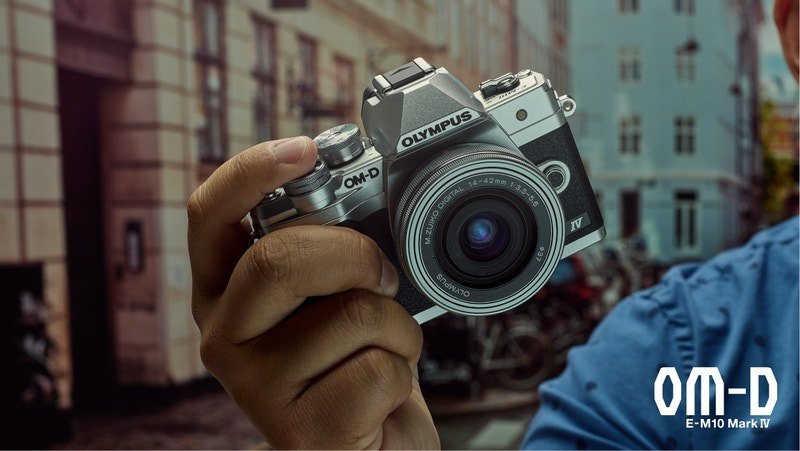
The OM SYSTEM M10 is a mirrorless camera built for people who want serious image quality without carrying a DSLR-sized brick around. It sits in the Micro Four Thirds ecosystem, meaning it pairs with a vast library of compact lenses that keep the whole kit small enough to fit in a jacket pocket. Whether you are stepping up from a phone camera or looking to lighten your travel load, this body is designed to disappear into your bag until the moment you need to shoot.
The primary job here is portability without sacrificing the sensor size. You get the dynamic range and low-light handling of a Micro Four Thirds sensor in a chassis that feels like a premium compact point-and-shoot from a decade ago, but with modern autofocus and video capabilities.
Quick Answer
| Feature | Details |
|---|---|
| Best for | Travel photographers, street shooters, and vloggers who prioritize small size and fast autofocus. |
| Skip if | You need full-frame shallow depth of field, extensive manual video controls, or a large touchscreen for creative framing. |
| One line | A pocketable Micro Four Thirds body that balances high-speed shooting with a genuinely small form factor. |
Swipe sideways to compare →
What actually changes the buy is fit, what you should skip, and which tradeoffs show up after week one — not a longer spec sheet. If you already know the job, see current options while you read the criteria.
What the Official Page Lists
The official OM SYSTEM product page for the M10 Mark IV highlights its positioning as a compact, high-performance mirrorless camera. While specific numerical specs like exact megapixel counts or shutter speeds are often detailed in the full technical PDF rather than the landing page snippets, the core identity is clear: it is the "Mark IV" iteration, indicating a mature, refined design.
Note: Specific sensor resolution, ISO range, and video bitrate details should be verified on the official OM SYSTEM product page or the technical specifications sheet, as these can vary by region and firmware updates.
Who It’s For
The M10 is designed for a specific type of photographer who values the experience of shooting as much as the result.
- Travel and Street Photographers: The small size means you are less likely to intimidate subjects and more likely to have the camera with you. The fast autofocus system is critical for capturing fleeting street moments.
- Vloggers and Content Creators: The compact body is easier to hold for extended periods than larger mirrorless cameras. The in-body image stabilization helps keep footage steady without needing a heavy gimbal.
- Micro Four Thirds Enthusiasts: If you already own MFT lenses, this body is a lightweight alternative to larger OM SYSTEM bodies, allowing you to use your existing glass in a more portable package.
Who Should Skip
This camera is not the right tool for every job.
- Full-Frame Purists: If you are used to the extreme shallow depth of field or the specific noise characteristics of full-frame sensors, the Micro Four Thirds format will feel different. You will need wider lenses to achieve similar bokeh.
- Heavy Video Professionals: While it records video, it lacks the extensive manual controls, dual card slots, and cooling systems found in dedicated cinema cameras or higher-end OM SYSTEM bodies.
- Touchscreen Relyers: The M10 series has historically favored a traditional viewfinder and button layout over a large, touch-centric interface. If you rely heavily on touch-to-focus or touch menus, you may find the workflow slower.
Mid-check
If the criteria above already match how you actually use the space, stop here and check current options before you keep reading comparison noise.
How to Choose in Five Minutes
If the criteria already match how you live in the space, see current options before you keep comparing.
- Check Your Lens Kit: Do you already own Micro Four Thirds lenses? If yes, the M10 is a logical, compact addition. If no, budget for at least one versatile zoom lens (like a 14-42mm or 12-40mm equivalent) to get started.
- Define Your Primary Use: If you are shooting 90% of the time in bright daylight or using it for social media, a phone might suffice. If you need low-light performance, fast action shots, or interchangeable lenses, the M10 is the step up.
- Verify Current Availability: The M10 Mark IV is a specific iteration. Ensure you are looking at the current stock and price, as older Mark III models may be discounted but lack the latest autofocus refinements.
- Read Recent Firmware Notes: OM SYSTEM regularly updates firmware to improve autofocus and video performance. Checking the latest firmware version before buying ensures you are getting the most polished experience.
Frequently Asked Questions
Is the OM SYSTEM M10 good for beginners? Yes, it is an excellent choice for beginners who want to learn photography without the bulk of a DSLR. The autofocus does most of the heavy lifting, allowing you to focus on composition. However, be prepared to learn the specific button layout, which prioritizes physical controls over touch.
Can I use Olympus lenses with the OM SYSTEM M10? Yes. OM SYSTEM is the successor to the Olympus camera brand, and the Micro Four Thirds system is fully compatible. All legacy Olympus MFT lenses will work on the M10, giving you access to a decades-long library of glass.
Does it have image stabilization? Yes, the M10 features in-body image stabilization (IBIS). This is crucial for handheld video and low-light photography, allowing you to shoot at slower shutter speeds without blur.
What is the battery life like? Battery life is generally decent for a compact camera, but it is not class-leading. For all-day travel, carrying a spare battery is recommended. You can find compatible batteries and chargers in the accessories section.
Bottom Line
The OM SYSTEM M10 is a focused tool. It doesn’t try to be everything to everyone. It is a small, fast, and reliable Micro Four Thirds camera for people who want to shoot more and carry less. If your priority is a big screen and full-frame noise performance, look elsewhere. If your priority is a camera you will actually take with you, the M10 is a strong contender.
Some links on this page may be affiliate links. We may earn a commission if you buy through them, at no extra cost to you.
Related Guides: How to Choose Your First Mirrorless Camera | Micro Four Thirds Lens System Explained